
Why the Sale of Hotel Aiken Matters to the Community
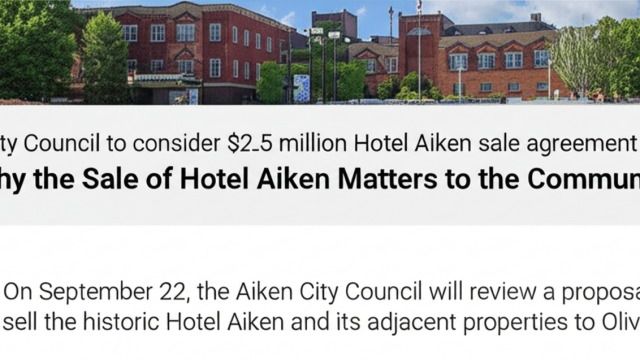
On September 22, the Aiken City Council will review a proposal to sell the historic Hotel Aiken and its adjacent properties to Oliver Hospitality Group for a reported $2.5 million. The decision, while ostensibly a business transaction, carries far‑reaching implications for the local economy, downtown revitalization, and the identity of Aiken, South Carolina. Understanding the stakes involved helps residents, investors, and civic leaders gauge how this deal could reshape the city’s future.
Hotel Aiken: A Cornerstone of Aiken’s Heritage
Opened in 1919, the Hotel Aiken has long stood as a symbol of the city’s charm and hospitality. Over the decades, it has hosted dignitaries, hosted weddings, and offered a cozy lodging experience that many locals and visitors cherish. However, like many historic properties, the hotel has faced mounting maintenance costs, shifting market demands, and the challenge of staying competitive against modern resorts.
For the City of Aiken, the hotel is more than an aging building. It represents a potential catalyst for downtown economic activity, a venue for events, and a tangible link to the city’s past. The $2.5 million sale price reflects not only the building’s physical value but also its intangible assets—brand equity, loyal clientele, and the promise of future revenue streams.
Who Is Oliver Hospitality Group?
Oliver Hospitality Group is a regional operator known for managing boutique hotels across the Southeast. With a track record of revitalizing underperforming properties, the company brings both capital and expertise to its acquisitions. Their involvement signals confidence in Hotel Aiken’s potential, suggesting that the building can be modernized, marketed, and leveraged to generate sustainable profits.
Critics, however, caution that a corporate purchase could lead to prioritization of profit over community interest. The council’s deliberations will therefore weigh the benefits of professional management against possible cultural dilution.
Economic Rationale Behind the Sale
- Capital Injection. The $2.5 million sale would provide a much‑needed liquidity boost for the city, enabling the reallocation of municipal funds toward infrastructure upgrades, public safety, and youth programs.
- Job Creation. Oliver Hospitality Group projects that its investment could create up to 30 new permanent jobs, from front‑desk staff to culinary positions, thereby reducing local unemployment rates.
- Increased Tax Revenue. A profitable hotel would broaden the city’s tax base, generating additional property and sales taxes that could be reinvested into community services.
- Tourism Growth. By modernizing the property, the hotel could attract new visitors, supporting nearby restaurants, shops, and cultural attractions.
Community Concerns and Counterarguments
While the economic upside is compelling, several issues remain at the forefront of public debate:
- Preservation vs. Development. Historic preservationists worry that corporate ownership might compromise the building’s architectural integrity for cost‑efficient renovations.
- Public Access. There are concerns that a privately owned hotel could restrict community use of spaces previously available for local events.
- Profit Distribution. Residents question whether the revenue generated will truly benefit the local economy or will largely return to the hotel’s investors.
- Long‑Term Commitment. A private operator may be more inclined to sell the property again after a short period, creating uncertainty about the hotel’s future role in Aiken.
Stakeholder Voices
During the council’s open‑air discussions, several key stakeholders voiced their perspectives:
Mayor Carla McCall. “The sale offers a pragmatic solution that preserves this landmark while unlocking its economic potential.”
Local Historian, Dr. Miriam Thompson. “We must safeguard the hotel’s historic character. Any renovation plan must be vetted by a preservation board.”
Business Owner, Jeff Sanders. “Increased foot traffic from a revitalized hotel could boost sales for surrounding shops.”
Resident Group, Aiken Community Alliance. “We need assurances that public spaces will remain accessible and that job opportunities will favor local residents.”
What the City Council Is Evaluating
The council’s agenda for September 22 is clear: review the sale agreement, examine due diligence reports, and decide whether to approve the transaction. The evaluation will revolve around several criteria:
- Financial Viability. Does the $2.5 million valuation reflect the property’s true market value, considering future revenue projections and necessary renovations?
- Community Impact. What is the projected net benefit to the city in terms of jobs, taxes, and tourism?
- Preservation Safeguards. Are there binding covenants that guarantee the hotel’s architectural and cultural heritage will be respected?
- Strategic Fit. Does the sale align with Aiken’s long‑term development plans, especially the downtown revitalization strategy?
How Residents Can Get Involved
Community engagement is critical to ensuring that the final decision reflects the city’s best interests. Here’s how you can participate:
- Attend the Council Meeting. The meeting is open to the public; bring your questions and concerns to the floor or ask for a public comment.
- Submit Written Comments. The council will accept written submissions until the day before the meeting. Submit a concise, evidence‑based opinion highlighting key points.
- Join a Local Advocacy Group. Organizations such as the Aiken Historical Society or the Downtown Business Association often lobby city officials and can amplify your voice.
- Use Social Media. Share updates, photos, and insights using the hashtag #HotelAikenFuture to raise awareness and gather broader community sentiment.
- Participate in Public Workshops. The city may organize follow‑up workshops to discuss potential redevelopment plans and preservation strategies.
Potential Outcomes and Next Steps
If the sale is approved, the council will likely stipulate a leaseback arrangement or a phased handover, allowing the city to oversee initial renovations and maintain some control over public spaces. Should the proposal be rejected, the city may explore alternative strategies, such as a public‑private partnership or a community‑ownership model.
Regardless of the outcome, this decision will set a precedent for how historic properties are managed in Aiken. It underscores the need for a balanced approach that marries economic development with cultural preservation.
Looking Ahead: The Role of Aiken’s Residents
For residents, the Hotel Aiken sale is more than a financial transaction. It is an opportunity to shape the city’s identity and to ensure that progress does not come at the cost of heritage. By staying informed, engaging in civic processes, and advocating for transparency, the community can steer the hotel’s future toward prosperity that benefits everyone.
As the City Council convenes on September 22, all eyes will be on the final vote. The decision will not only determine who owns a building but will also signal Aiken’s commitment to sustainable growth, responsible stewardship of historic assets, and a vibrant, inclusive downtown for generations to come.